

AI Adoption Challenges: How to Overcome Barriers and Successfully Implement AI in Your Business
Business
06/10/25
Read time: 22 min

AI has been a hot topic in recent years. The artificial intelligence technology market is enormous, projected to reach over 244 billion dollars in 2025. It is widely implemented across industries, from retail and e-commerce to automotive and life sciences. Plus, 9 out of 10 organizations support AI for gaining a competitive edge over rivals, meaning that the level of adoption is highly likely to increase shortly.
Nevertheless, the reality is more complex than it might seem. Smooth AI adoption is scarce, to say the least: almost every organization, including startups, scale-ups, and even big enterprises, experiences a variety of challenges when it comes to implementing this technology. Others don’t see measurable benefits. Businesses implement AI, observe some productivity improvements, and believe it is effective. But is revenue really rising as a result? Reducing expenses? Increasing client satisfaction? Without systematic measurement and a strategic approach, it is impossible to determine. The challenges provided in this article are the most common obstacles to seamless AI rollout. Let’s review how they can be addressed together.
Understanding the Current Landscape of AI Adoption

As of the end of 2024, approximately 42% of surveyed enterprise-scale businesses with more than 1,000 employees had implemented AI in their operations, while an additional 40% had not yet adopted AI but were actively exploring it. On the contrary, just 5 years ago, many organizations didn’t even begin adopting AI, believing it was nothing more than an industry’s whim. Now, this viewpoint seems imprudent, to say the least. To prove this point, let’s take a look at some of the most promising data:
- AI will be the biggest commercial benefit in the future, according to 72% of executives.
- 59% of organizations that have already investigated or implemented AI have increased their deployment or investments in the technology.
- The largest AI investments at companies investigating or using AI are in research and development (44%) and reskilling/workforce development (39%).
- The industries with the greatest concentration of AI leaders are usually those first affected by digital disruption, about ten and a half years ago, which gave them an advantage in building strong digital capabilities. These include banking (35%), software (46%), and fintech (49% are leaders).
- Limited AI skills and expertise (33%), excessive data complexity (25%), ethical concerns (23%), AI projects that are too challenging to integrate and scale (22%), high cost (21%), and a lack of tools for AI model development (21%), are the main obstacles preventing successful AI adoption at businesses investigating or implementing AI.
Now, let’s take a closer look at these challenges. While they exist, there are still methods that can be utilized to a greater or lesser degree to implement intelligent automation effectively and achieve those much-needed long-term outcomes.
Lack of Strategic Vision for AI
Businesses all too frequently hop on the AI bandwagon without having a clear plan, which leads to confusion. Imagine a large healthcare organization experimenting with chatbots and invoicing automation, but failing to identify specific areas where AI may truly be useful, such as early disease identification or individualized patient care. The outcome? A series of little disparate experiments that fail to yield significant results.
The main cause of the issue is the absence of an integrated strategy or overarching blueprint for how AI will eventually benefit the company. For instance, in the manufacturing industry, well-intentioned teams may use AI to improve a single production line without taking into account the facility-wide business transformation potential of automated quality inspection or predictive maintenance. Your AI initiatives will be disjointed and never reach their full potential if you don’t have a unifying map.
Rather than getting distracted by shiny objects, begin with a broad overview of your business. Take note of the many departments you have, the data they produce, and the areas where efficiency leaks are most often found. To improve targeted marketing and optimize inventory allocation, for instance, retailers could examine customer behavioral data. In the financial services sector, you can focus on risk profiling or loan sanctioning to see how AI can speed up decision-making and minimize human mistakes.
Next, develop a clear vision for how AI projects will benefit every aspect of the company. Imagine creating a meticulously planned map instead of randomly placing pins throughout a metropolis. You can make sure that any AI project aligns with your overall mission by setting clear objectives, such as improving the accuracy of demand forecasts or cutting down on customer service response times. It doesn’t just keep teams and budgets in sync. You can make sure everyone is moving in the right direction rather than off into initiatives that lead nowhere.
Struggle with your AI strategy? Talk to our experts and start seeing measurable outcomes from technology implementation.
Leadership Inertia
When leadership is slow to adopt new technologies, even the most powerful firms fall behind. This lack of urgency with AI might show itself as stalled projects and lost chances. One notable example is how Amazon’s early and aggressive adoption of AI-driven recommendation engines and predictive analytics greatly outpaced that of the majority of physical stores, such as Sears and Kmart. Due to concerns about return on investment and a fear of risk associated with significant technological developments, the leadership teams of these heritage businesses were reluctant to challenge their established business structures. Amazon executives, on the other hand, embraced AI at every level, which led to customized product recommendations, more efficient inventory management, and a generally better shopping experience compared to the closest competitors.
Parts of the media sector provide a similar example. Some established media giants watched from the sidelines as Netflix threw caution to the wind with its AI-powered recommendation algorithms for its streaming service. They clung to conventional programming techniques rather than actively pursuing data analytics and machine learning to comprehend viewing habits. The results were outstanding. Netflix managed to dominate the market for personalized content distribution and establish viewer expectations for on-demand content, all because executives made a strategic decision to adopt new technologies.
The first step in breaking the leadership inertia is to show decision-makers how AI could benefit their specific industry. If you work in retail, give specific instances of how AI-driven inventory optimization lowers expenses and waste. Show how machine learning algorithms in banking can detect fraudulent transactions early on, preventing millions of dollars in preventable losses.
The second stage, after defining the value proposition, is for leaders to support AI from the ground up. This can be accomplished by including AI-driven KPIs in strategic planning, funding executive team training sessions, or even visiting successful, AI-embracing, forward-thinking companies. The intention is to establish a culture in which adopting and experimenting are not only encouraged but also accepted.
Fear of the Unknown
“Change before you have to,” as Jack Welch famously said, is especially relevant for companies that are hesitant to use AI. It can be frightening even to consider replacing aging infrastructure, redesigning data pipes, or using advanced ML algorithms. While business executives dread high costs and an uncertain return on investment, employees fear that their abilities may become obsolete.
Starting small is a crucial strategy for overcoming fear. Try piloting specific initiatives instead of implementing a whole AI overhaul, like machine learning for demand forecasting or predictive analytics for consumer segmentation. With this staged approach, teams may demonstrate ROI on a modest scale, codify data governance processes, and gain practical experience. Keep lines of communication open throughout the process: explain how AI will complement current tasks rather than replace them, and offer ongoing training on technology such as natural language processing (NLP) systems, neural networks, and sophisticated data visualization tools. Being transparent facilitates learning and increases trust.
Lack of Understanding of AI’s Potential
Despite all the hype about artificial intelligence, most organizations have little idea how machine learning and data-driven insights could transform their daily operations. This lack of understanding typically results in the wasting of AI potential or in technological deployments that fall short of business goals.
- Set up workshops tailored to a specific industry to showcase practical applications of AI, such as supply chain optimization using predictive analytics or robotic customer service using natural language processing.
- Plan seminars with professionals who have effectively implemented AI in related fields, providing case studies with quantifiable returns on investment.
Hire competent AI consultants who can assess your infrastructure and workflows as they stand. These consultants are usually:
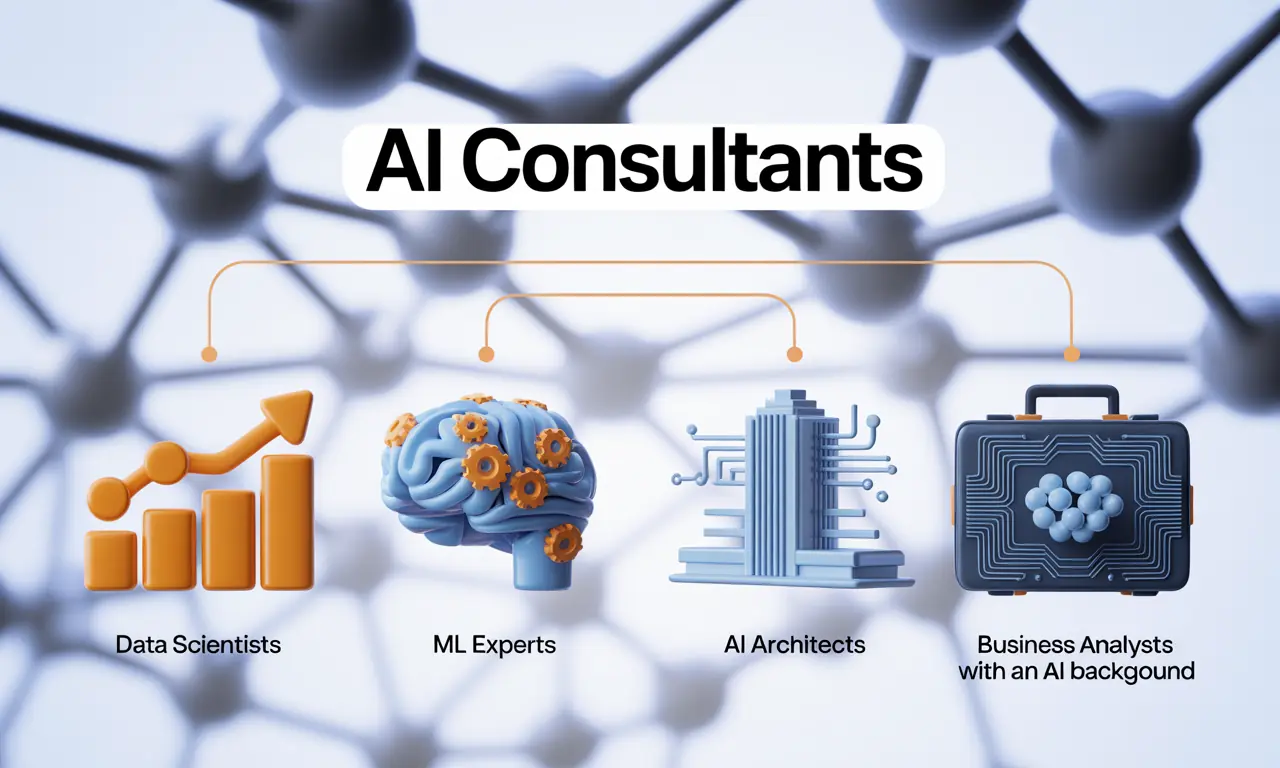
- Data scientists. Data wranglers, algorithm developers, and statistical modelers.
- ML experts. They integrate models into production systems and develop scalable pipelines to operationalize AI.
- AI architects. Ensure AI solutions integrate well into current technology stacks by taking the lead in technical direction and system architecture.
- Business analysts with an AI background. Convert intricate AI capabilities into practical use cases thanks to commercial and technological expertise.
Work together with these specialists to investigate specialized solutions that tackle certain company issues, such as customer experience personalization, forecasting enhancement, or repetitive work automation.
Another way to address the “fear of the unknown” is by hiring asset-based consulting. The majority of AI-driven projects benefit from this type, in which consulting companies offer pre-built tools, techniques, and frameworks to get artificial intelligence (AI) systems off the ground in addition to their knowledge. These “assets” could be high-level project accelerators, domain-specific data analytics tools, or predeployed machine learning models. Businesses may shorten development time, lower implementation risk, and quickly reap the benefits of AI by utilizing these established quantities. Since it offers expert advice along with practical resources to ease adoption and avoid typical errors, this strategy is particularly beneficial to innovative AI firms.
Data Availability and Quality Issues
Large amounts of precise, well-structured data are essential for AI platforms to function, yet most businesses are constrained by discrete data repositories, various formats, and outdated documentation. AI algorithms cannot function at their best when data is dispersed across platforms or locked in different databases. Errors or missing fields in the data often result in poor insights, which ultimately erode confidence in AI-driven choices. Good data governance procedures that outline appropriate ownership, accountability, and data management standards are necessary to mitigate these threats.
By investing in data integration technologies, such as automated extract, transform, and load (ETL) processes, companies can standardize and merge data from many different sources, creating a more robust analytics environment. Regular cleaning cycles and audits keep datasets in optimal condition and spot inconsistencies before they can skew AI results. This methodical approach eventually ensures that the data used in machine learning models is reliable and accessible, opening the door for AI applications that genuinely support strategic value and operational enhancements.
Skills Shortage
In 2023, approximately 58% of HR managers reported that their organizations planned to purchase AI training resources to close the skills gap brought on by AI, while 41% of managers said their organizations intended to hire new staff to address the AI-caused skills shortage. According to a 2024 survey, 81% of IT workers believe they can use AI, but only 12% are proficient in the field. Additionally, 70% of workers probably need to improve their AI abilities.
That being said, the absence of qualified experts to develop, deploy, and manage AI solutions is the largest obstacle to AI adoption. Data science, MLOps, machine learning engineering, and data engineering are all necessary; these positions call for coding abilities in addition to domain knowledge and strong analytical abilities. Training programs or workshops that enable current employees to gain the requisite AI capabilities can help close the internal gap.
Large-scale university collaborations and specialized boot camps contribute to the creation of a steady stream of future graduates who have worked with AI before joining the workforce. AI-as-a-Service solutions are available to those companies looking for a quicker, more agile solution. By providing pre-built algorithms, data pipelines, and analytics, these external providers eliminate the need for burdensome in-house knowledge.
Integration with Existing Systems
The process of integrating modern instruments with legacy infrastructure is the most difficult of all the obstacles. Since the outdated and monolithic system is not built for APIs and advanced analytics, a rapid upgrade could entirely stop operations; consequently, a cautious and staged approach is required. Start by mapping out all of the current platforms and determining which ones AI can “touch in,” such as a CRM for customer data or an ERP system for inventory data. Businesses can handle the integration step-by-step with less risk and downtime if they have this map.
Integration platforms or middleware solutions serve as translators between new AI modules and legacy systems to further streamline the process and improve data flow. By standardizing various data formats and protocols, these technologies enable AI algorithms to function without requiring the total breakdown of current tech stacks. Businesses can test, validate, and improve AI components before integrating them fully by doing so in phases; this way, daily activities go on without interruption, and there are no unpleasant surprises.
Data Privacy and Security Concerns
Privacy and security risks are unavoidable when AI systems handle sensitive data, such as financial information, proprietary information, or personal identifiers. Significant fines and a decline in customer confidence may result from breaking data privacy laws such as the California Consumer Privacy Act (CCPA) or the General Data Protection Regulation (GDPR). Organizations must use privacy-preserving AI techniques, such as federated learning or differential privacy, that reduce the exposure of individual data points in order to overcome these obstacles.
Multiple organizations are stepping up their efforts to reduce the hazards associated with gen-AI. Compared to early 2024, respondents are more likely to say their companies are actively managing risks associated with intellectual property infringement, cybersecurity, and inaccuracy. These are the most common gen-AI-related risks that respondents most frequently claim have had a detrimental impact on their companies.
Interestingly, compared to respondents from smaller businesses, those at larger organizations report minimizing greater risks. For instance, they are far more likely than others to claim that their companies are handling possible cybersecurity and privacy issues, but they are not more likely to be handling risks associated with the precision or explicability of AI outputs.
Strong cybersecurity best practices, such as stringent access controls, encryption both in transit and at rest, and continuous network monitoring, are essential for preserving data integrity. To keep ahead of new threats, whether they take the shape of insider threats or highly skilled ransomware assaults, security policies must be updated and improved on a regular basis. Organizations may harness the potential of AI while protecting consumer data and organizational resources by coordinating AI activities with existing compliance frameworks and making proactive investments in cybersecurity.
Ethical Considerations
Unintentionally reinforcing biases in historical data is a common issue associated with AI adoption. It can result in systematically unfair outcomes in areas like loan applications and applicant screening. The “black box” aspect of AI decision-making is another main concern; deep neural networks in particular, as well as the majority of sophisticated models, do not explain how they reach particular results. Thus, organizations must have strict ethical standards for all stages of AI development and implementation to prevent problems. By revealing the inner workings of models, explainable AI (XAI) techniques enable the identification and rectification of biased results. Frequent audits of AI systems, together with timely corrective action and transparency regarding the decision-making process, also guarantee equity, uphold accountability, and preserve user confidence.
High Implementation Costs
Starting an AI development project always entails large upfront costs for cloud computing, proprietary software that must be leased, or custom hardware—expenses that could discourage smaller businesses from attempting AI at all. In addition to these initial costs, businesses also have to contend with continuous expenses, including constant model enhancements, recurring system upgrades, and always-growing data storage. Paying for staffing and training is another expense; hiring data scientists and machine learning engineers or retraining current teams takes time and money. The economic burden is also increased by data expenses, such as data collecting, cleaning, and labeling. The cost keeps rising when you factor in the moral and legal costs of complying with regulations and carrying out fairness audits.
However, if the competition continues to advance and capture market share, the opportunity cost of delaying the adoption of AI may be the largest sunk cost. It is more difficult to catch up in fast-paced marketplaces, and dragging one’s feet could result in lost opportunities for innovation.
Before expanding, begin gradually with pilot projects that clearly show a return on investment in order to overcome such financial obstacles. Financial risk can be distributed through cost-sharing agreements like research alliances or consortia, while open-source AI tools enable experimentation without incurring significant licensing costs. Organizations may make the adoption of AI more economically viable and prevent the loss of favorable development potential by utilizing innovative finance arrangements, low-cost technological solutions, and incremental rollout.
Employee Resistance
Many are concerned that AI will make their jobs obsolete. For instance, a call center operator can worry that chatbots and virtual assistants will do their work, while a data entry clerk might worry about losing their job to automated data processing software. Nonetheless, research indicates that AI can create net jobs across a wide range of industries. In their “The Future of Jobs Report,” the World Economic Forum states that while automation and AI may eliminate up to 85 million jobs by 2025, they are also likely to generate around 97 million new positions, especially in software development, data analytics, and AI monitoring.
The important thing to remember is that AI is meant to supplement human abilities, not replace them. Customer support chatbots, for instance, may automatically answer routine questions around the clock, freeing up human representatives to address more difficult or valuable customer engagements. Additionally, providing specialized training and upskilling initiatives might reduce anxiety. Workers who receive training on AI management, maintenance, or handling are likely to find new career paths that weren’t available a few years ago. By framing AI as a force for efficiency and expansion rather than a threat, companies may lessen opposition and assist staff in adapting to the changing environment.
Unrealistic Expectations
Although AI is a fantastic technology, it is not a panacea for all business issues. Disappointment is almost a given when businesses have unrealistic expectations about AI, expecting immediate, revolutionary benefits without understanding the complexities involved. Projects may be abandoned as a result of this disparity between advertising and reality, as stakeholders lose faith in first pilots or proof-of-concept initiatives that don’t provide impressive results right away. 54% of Belgian corporate leaders think they are ahead of their rivals in using artificial intelligence (AI) technology, according to a study commissioned by Sopra Steria, which purchased Tobania and Ordina in 2023. Significant overconfidence is implied, which might not accurately represent the state of AI adoption in the nation.
Starting small with targeted pilot projects that highlight AI’s real advantages is the best course of action. Before expanding to a full inventory, a retail corporation can, for example, test demand predictions for a particular product line. By doing this, teams can improve models, obtain proof of AI’s influence, and get a better idea of what can be accomplished in a given amount of time. These little successes help control expectations, promote cross-functional assistance, and lay a solid foundation for future, larger, more extensive AI implementations.
Conclusion
AI adoption is an exciting yet challenging venue. Naturally, there are no two similar cases when exploring such a deep and intriguing technology, but this set of challenges is based on the shared experiences of diverse organizations across industries. If you want your journey to be as smooth as possible, we at Engipulse recommend preparing for these challenges and acting accordingly.
If you want to learn more about successful AI adoption or have an exciting project in mind, contact us. We have broad horizontal expertise in AI solutions and beyond.