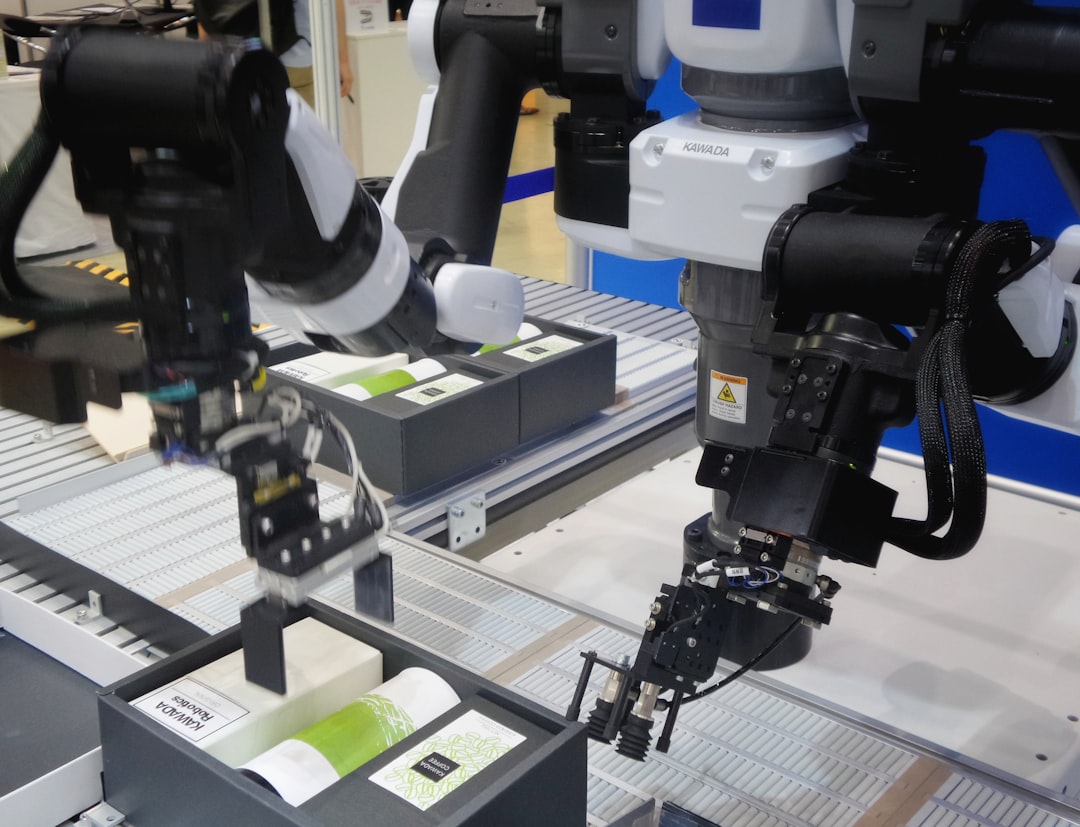

Engineering Teams in the AI Era: What Changes, What Stays, and How to Prepare
Future of Work
28/04/26
Read time: 7 min
According to Gartner, by 2028, 75% of enterprise software engineers will use AI code assistants, up from less than 10% in early 2023. The shift isn’t coming—it’s already reshaping how engineering organizations operate, hire, and deliver. Yet the conversation around AI in engineering often splits into two unhelpful extremes: either AI will replace developers entirely, or it’s merely a productivity tool with marginal impact.
The reality is more nuanced and more actionable. AI is fundamentally changing the composition of engineering teams, the skills that matter, and how technical leaders should structure their organizations. This isn’t about replacing engineers—it’s about redefining what engineering teams look like when AI handles an increasing share of implementation work.
The Shift from Coding Capacity to System Thinking
The bottleneck in software delivery has never really been typing speed—but AI is making this truth inescapable. When AI assistants can generate functional code in seconds, the premium shifts decisively toward engineers who can architect systems, evaluate trade-offs, and maintain coherent technical vision across complex domains.
A McKinsey study found that developers using AI tools completed coding tasks up to twice as fast—but the gains were heavily concentrated in well-defined, repetitive work. Complex debugging, system design, and cross-functional integration saw minimal improvement. This asymmetry has profound implications for team structure:
- Senior-to-junior ratios are shifting. Organizations report needing fewer junior developers for boilerplate work, but facing acute shortages of senior engineers who can validate AI output and maintain architectural coherence.
- Code review becomes critical infrastructure. When AI generates significant portions of a codebase, human review shifts from optional to essential—and requires deeper expertise, not less.
- Domain expertise compounds in value. Engineers who understand business context can prompt AI effectively and catch domain-specific errors that pass syntactic checks.
Forward-thinking CTOs are already restructuring teams around these dynamics, often working with dedicated team models that emphasize senior expertise and domain specialization over raw headcount.
How Technical Hiring Is Evolving
Traditional technical interviews—whiteboard algorithms, take-home projects, live coding—were designed for a world where implementation skill was the primary filter. That world is fading. When candidates can legitimately use AI tools in their daily work, testing them in AI-free environments produces misleading signals.
Engineering leaders are experimenting with new evaluation approaches:
- AI-assisted assessments: Candidates work with AI tools during interviews, evaluated on how effectively they leverage them, catch errors, and integrate outputs into coherent solutions.
- System design emphasis: Interviews weight architectural thinking, trade-off analysis, and communication over implementation speed.
- Production debugging scenarios: Real-world debugging of AI-generated code tests the critical skill of validating and correcting automated output.
The talent market is responding accordingly. In Central & Eastern Europe, engineering programs are increasingly emphasizing systems thinking and AI collaboration skills—one reason CTOs continue to bet on CEE engineering talent for complex technical work.
AI Agents as Team Members: The Operational Reality
The emergence of AI agents capable of autonomous task execution represents a more significant organizational shift than code assistants. Unlike copilot-style tools that augment individual developers, agents can operate semi-independently—writing tests, refactoring code, monitoring systems, even triaging bugs.
Stripe’s engineering team reported that their internal AI agents now handle approximately 30% of code review comments and automate significant portions of their CI/CD pipeline maintenance. This isn’t hypothetical—it’s production reality at scale.
However, integrating agents into engineering workflows requires new operational disciplines:
- Clear scope boundaries: Agents need well-defined domains of authority. Ambiguity leads to unpredictable behavior at the worst times.
- Audit and observability: Every agent action must be traceable. When an agent-introduced change causes production issues, teams need clear forensic paths.
- Human escalation protocols: Agents must recognize when to defer to human judgment—and the team must have capacity to handle escalations.
Organizations that treat AI agents as tools rather than teammates consistently underperform those that invest in proper integration, onboarding, and governance—just as they would for human engineers.
Preparing Your Engineering Organization
The organizations adapting most successfully share common patterns in their approach. They’re not chasing every new AI announcement; they’re building systematic capability.
- Inventory your workflow. Map which engineering activities are high-volume/low-complexity (prime for AI automation) versus high-complexity/high-context (where human judgment remains essential).
- Redesign team topology. Consider reducing junior roles focused on implementation while investing in senior architects, staff engineers, and technical program managers who can orchestrate AI-augmented delivery.
- Update your skills framework. Career ladders built around code output volume are obsolete. Redefine progression around system thinking, AI collaboration effectiveness, and technical leadership.
- Pilot deliberately. Select bounded, measurable projects for AI integration. Avoid the trap of scattering AI tools across the organization without coherent measurement.
- Invest in AI literacy at leadership level. Engineering directors and VPs who don’t understand AI capabilities and limitations will make poor strategic decisions about team structure and tooling investment.
This preparation is especially critical for organizations scaling with resource constraints—where AI-augmented teams can deliver disproportionate output if properly structured.
What Doesn’t Change
Amid the structural shifts, certain fundamentals remain constant—perhaps more important than ever. Software engineering has always been about managing complexity, communicating clearly, and building systems that serve human needs. AI amplifies engineering capacity but doesn’t change these underlying realities.
Teams that maintain strong engineering culture—clear ownership, rigorous quality standards, sustainable pace, and genuine collaboration—will absorb AI capabilities more effectively than those hoping AI will compensate for organizational dysfunction.
The engineers who thrive in this era will be those who’ve always focused on understanding problems deeply, designing solutions thoughtfully, and communicating effectively. AI makes these skills more valuable, not less.
The question for engineering leaders isn’t whether AI will change their teams—it’s whether they’ll shape that change strategically or react to it after the fact.