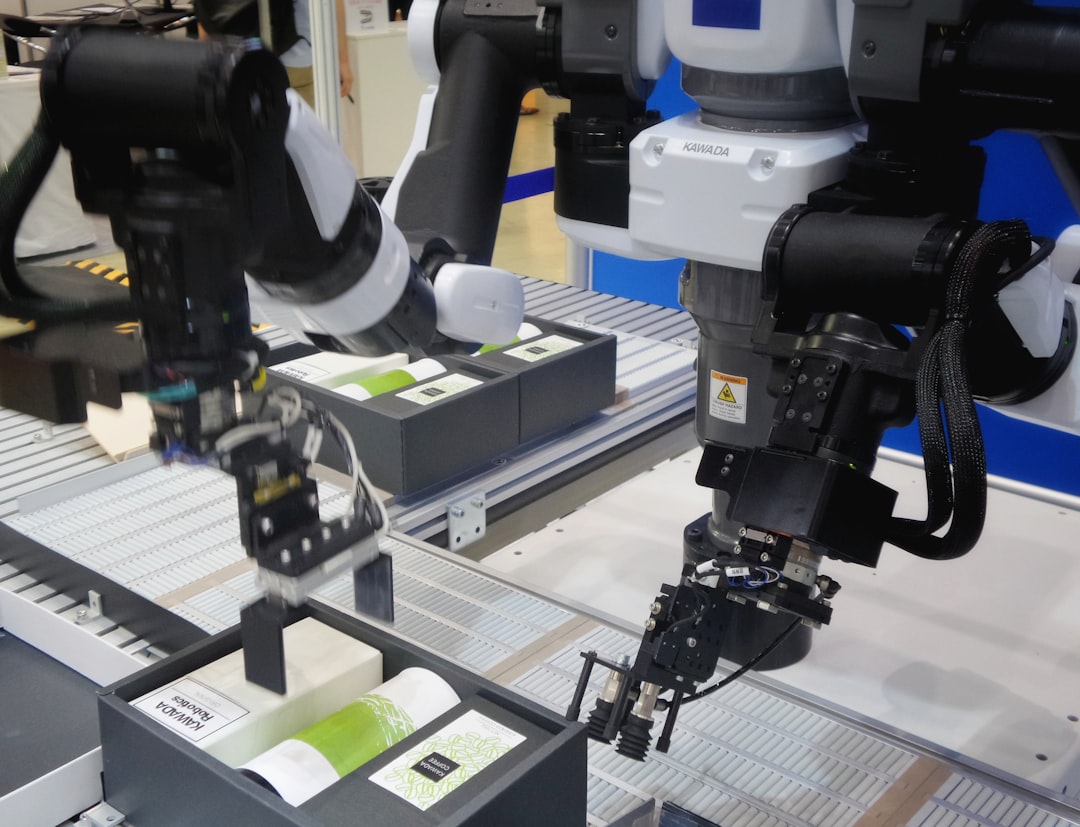

The AI-Augmented Engineering Team: How Technical Hiring and Team Structures Are Evolving in 2026
Future of Work
02/08/26
Read time: 7 min
A recent Gartner forecast projects that by 2028, 75% of enterprise software engineers will use AI code assistants daily, up from less than 10% in early 2023. But the more profound shift isn’t about individual productivity—it’s about how entire engineering organizations are being restructured around human-AI collaboration. For CTOs and engineering leaders, the question is no longer whether to adopt AI tooling, but how to redesign teams, hiring practices, and career paths for a fundamentally different operating model.
The global AI talent landscape is also shifting rapidly. As Western AI labs adopt more cautious public communication strategies, researchers at Chinese AI labs have become increasingly vocal on global platforms, reshaping how AI knowledge flows across borders and where companies can source expertise. Engineering leaders must navigate this new reality while building teams that can leverage AI capabilities effectively.
The Emergence of Hybrid Human-AI Team Topologies
Traditional team structures built around fixed headcount and linear scaling are becoming obsolete. Forward-thinking engineering organizations are experimenting with hybrid topologies where AI agents handle specific functional roles—code review, documentation generation, test case creation—while human engineers focus on architecture decisions, stakeholder alignment, and novel problem-solving.
McKinsey’s 2026 State of AI report found that engineering teams using structured human-AI collaboration models showed 40% higher throughput on routine development tasks without increasing headcount. However, the same research revealed a critical caveat: teams that simply added AI tools without restructuring workflows saw only marginal gains.
The most effective configurations share common patterns:
- Clear task boundaries between AI-handled and human-owned work
- Explicit review gates where human engineers validate AI-generated outputs
- Feedback loops that continuously improve AI agent performance based on team input
- Preserved knowledge transfer mechanisms to prevent skill atrophy in junior engineers
Spotify’s platform engineering division offers a compelling example. In late 2025, they restructured their internal developer platform team around what they termed “AI-augmented squads”—six-person units where two roles were explicitly designated as AI agent managers responsible for configuring, monitoring, and improving automated workflows. The result was a 35% reduction in time-to-deployment for internal tooling updates.
Technical Hiring in the AI Era: New Competencies, New Assessments
The traditional technical interview—whiteboard algorithms, system design, and coding challenges—is increasingly misaligned with how modern engineering work actually happens. When engineers work alongside AI assistants that can generate boilerplate code and suggest implementations, the differentiating skills shift toward judgment, integration, and oversight.
IEEE’s 2026 Software Engineering Workforce Study identified five competencies that correlate most strongly with high performance in AI-augmented environments:
- Prompt engineering and AI interaction design—the ability to effectively direct AI tools toward desired outcomes
- Output validation and quality assessment—quickly identifying errors, hallucinations, or suboptimal solutions in AI-generated code
- Systems thinking at the integration layer—understanding how AI-generated components interact with existing architecture
- Ethical judgment and bias detection—recognizing when AI outputs may introduce security vulnerabilities or biased behavior
- Adaptive learning velocity—rapidly incorporating new AI capabilities as tooling evolves
Progressive organizations are redesigning their hiring processes accordingly. Some have introduced “AI-paired programming” interviews where candidates work alongside AI assistants to solve problems, with evaluation focused on how effectively they leverage, validate, and refine AI suggestions. Others assess candidates’ ability to identify flaws in AI-generated code samples—a skill that proves far more predictive of on-the-job performance than traditional algorithm recall.
Preparing Your Engineering Organization: A Strategic Framework
Organizational readiness for AI augmentation requires investment across infrastructure, process, and culture—not just tool procurement. Engineering leaders who treat AI adoption as a tooling decision rather than an organizational transformation consistently underperform expectations.
A structured preparation approach includes three parallel workstreams:
Infrastructure Readiness
AI-augmented development requires robust AI-native infrastructure that can support model inference, context management, and seamless integration with existing CI/CD pipelines. Organizations running outdated development environments often find that AI tool adoption stalls at the infrastructure layer.
Process Redesign
Workflows must be explicitly redesigned to incorporate AI touchpoints. This includes defining which tasks are AI-eligible, establishing review protocols for AI-generated outputs, and creating escalation paths for edge cases that require human judgment.
Cultural Adaptation
Perhaps most challenging is addressing engineer concerns about skill relevance and job security. Transparent communication about how roles will evolve—rather than disappear—is essential. Organizations that frame AI as amplifying engineer impact rather than replacing engineers see significantly higher adoption rates and tool utilization.
The Distributed Talent Advantage
AI augmentation is accelerating the viability of distributed and hybrid engineering teams. When AI handles synchronous tasks like code review and documentation, the coordination overhead of distributed teams decreases substantially. This creates strategic opportunities for organizations to access global talent pools more effectively.
Dedicated team models that combine embedded engineers with AI-augmented workflows are emerging as a particularly effective configuration. These structures allow organizations to scale capacity without the traditional tradeoffs between speed, quality, and cost—provided the underlying processes are designed for human-AI collaboration from the outset.
Companies scaling rapidly should also consider how platform engineering investments can amplify the effectiveness of both human engineers and AI agents by providing consistent, well-documented internal tooling.
Conclusion: The Window for Strategic Positioning
The organizations that will lead in 2027 and beyond are making structural decisions about AI integration today. This isn’t about adopting the latest coding assistant—it’s about fundamentally rethinking how engineering teams are composed, how technical talent is evaluated, and how human expertise combines with AI capabilities to deliver business value.
For CTOs and engineering leaders, the imperative is clear: begin treating AI augmentation as an organizational design challenge, not a procurement decision. Audit your current team structures, hiring practices, and development workflows against the emerging patterns of high-performing AI-augmented teams. The gap between leaders and laggards in this transition is widening rapidly, and the cost of delayed action compounds with each quarter.
Engipulse
Let’s Work Together
Get in touch and let’s discuss your business case — whether you need a dedicated engineering team, AI implementation, or custom software development.