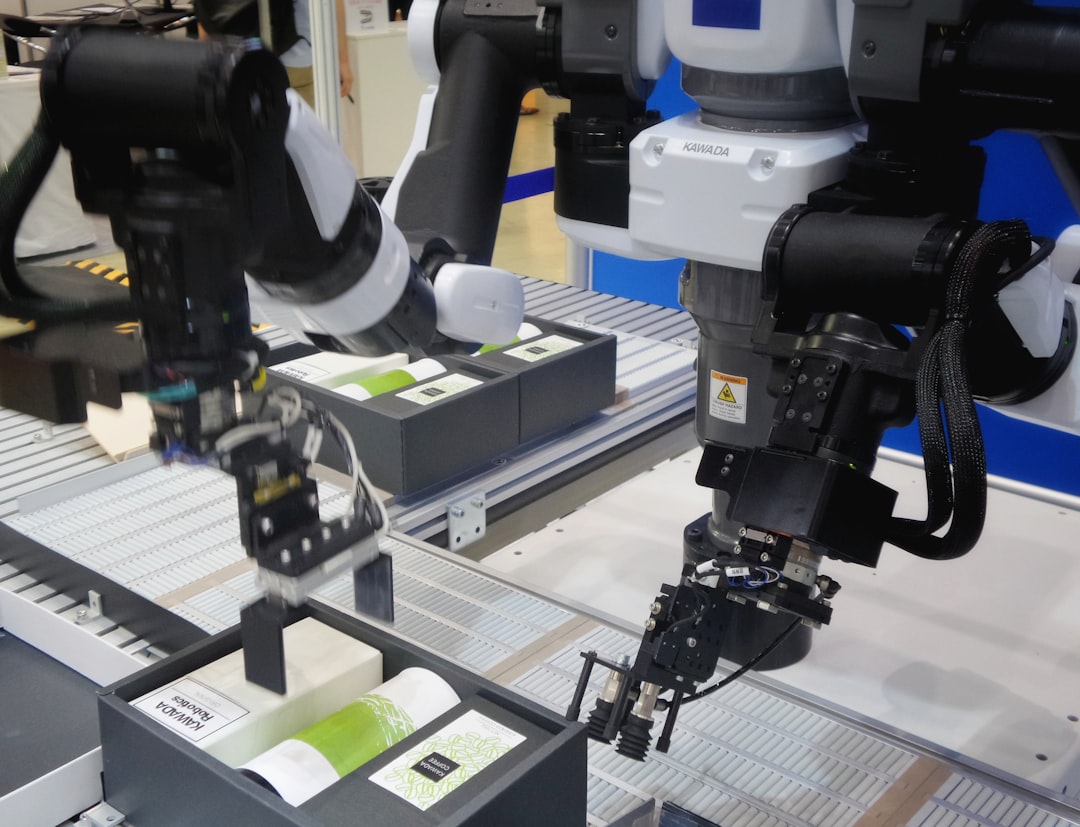

The AI-Native Engineering Org: How Technical Leaders Are Restructuring Teams for 2027 and Beyond
Future of Work
20/08/26
Read time: 6 min
In Q2 2026, a mid-sized fintech company in Berlin reduced its average feature delivery time from 14 days to 4.2 days. They didn’t hire more engineers. They restructured their existing team of 23 developers around AI agent workflows, with engineers shifting from writing code to orchestrating, reviewing, and refining AI-generated outputs.
This isn’t an outlier. According to Gartner’s 2025 Software Engineering Survey, 63% of enterprise engineering leaders have already restructured at least one team around AI-augmented workflows. By 2027, that number is projected to reach 80%.
For CTOs and VPs of Engineering, the question is no longer whether AI will change your org structure—it’s how quickly you can adapt without sacrificing quality, institutional knowledge, or team morale.
The Shift from Writing Code to Orchestrating Systems
The role of the software engineer is undergoing its most significant transformation since the advent of DevOps. Where engineers once spent 60-70% of their time writing and debugging code, AI-native teams are seeing that ratio invert. Senior engineers now spend the majority of their time on architecture decisions, prompt engineering, agent orchestration, and quality assurance of AI-generated outputs.
This shift has profound implications for team composition:
- Fewer junior “code writers,” more senior “system thinkers”: Entry-level tasks like boilerplate code generation and routine bug fixes are increasingly handled by AI agents. Teams need engineers who can evaluate, integrate, and govern these outputs.
- New hybrid roles emerging: Titles like “AI Systems Engineer” and “Agent Reliability Engineer” are appearing in job postings at a rate 340% higher than in 2024, according to LinkedIn’s 2026 Emerging Jobs Report.
- Cross-functional fluency becomes mandatory: Engineers must understand data pipelines, security implications, and business logic deeply enough to properly configure and constrain AI tools.
As we explored in our analysis of ClickUp’s AI Workforce Shift, even productivity software companies are restructuring their own engineering orgs around these principles.
Technical Hiring in the AI Era: What Actually Matters Now
Traditional technical interviews—whiteboard algorithms, LeetCode challenges—are losing predictive validity. When AI can solve most algorithmic puzzles faster than humans, testing for raw coding speed misses the point entirely.
Leading engineering organizations are redesigning their hiring processes around:
- System design depth: Can the candidate architect a solution that accounts for AI agent integration, failure modes, and human oversight requirements?
- AI tool proficiency: How effectively do they use AI assistants? Do they blindly accept outputs or critically evaluate and refine them?
- Cross-domain reasoning: Can they translate business requirements into technical constraints that guide AI behavior appropriately?
- Collaborative debugging: When an AI agent produces unexpected results, can they diagnose whether the issue is prompt engineering, model limitations, or data quality?
A practical shift we’re seeing in enterprise hiring: pair programming interviews now include AI assistant access as a default. The evaluation focuses not on whether candidates can solve the problem, but on how they leverage AI tools, what questions they ask, and how they validate outputs.
The Economics of Agent Orchestration
Cost control in AI-augmented development is becoming a core engineering discipline. The recent release of open-source agent harnesses claiming 30-75% cost reductions over managed solutions highlights a critical reality: AI agent costs can spiral without proper governance.
Enterprise engineering leaders are implementing cost controls through:
- Token budgeting by project and team: Setting hard limits on AI inference costs per sprint, with alerts at 70% and 90% thresholds.
- Model tiering strategies: Using smaller, cheaper models for routine tasks and reserving larger models for complex reasoning—similar to how teams already tier compute resources.
- Agent observability stacks: Full logging and tracing of agent interactions to identify wasteful patterns and optimize prompts.
Organizations integrating AI agents into their DevOps practices—as detailed in our piece on AI-augmented DevOps and DORA’s 2025 Framework—report 23% lower AI infrastructure costs than those treating agents as isolated tools.
Preparing Your Engineering Org: A Practical Roadmap
Organizational readiness for AI-native workflows isn’t a single initiative—it’s a continuous adaptation. Based on patterns from organizations successfully navigating this transition, here’s a phased approach:
Phase 1: Assessment (1-2 Months)
- Audit current workflows to identify tasks where AI agents can augment (not replace) human work
- Evaluate existing team skills against emerging requirements
- Establish baseline metrics for delivery velocity, quality, and cost
Phase 2: Pilot (2-4 Months)
- Select one team or project for AI-augmented workflow experimentation
- Implement agent observability and cost tracking from day one
- Document learnings in a structured format for organizational scaling
Phase 3: Scale (Ongoing)
- Develop internal training programs for AI-native engineering practices
- Revise hiring criteria and interview processes
- Build or adopt governance frameworks for AI agent usage
For organizations lacking internal capacity to execute this transition, dedicated development teams with pre-existing AI workflow experience can accelerate the learning curve significantly.
The Leadership Imperative
The engineering leaders who thrive in 2027 won’t be those who adopted AI tools first—they’ll be those who restructured their organizations to extract sustainable value from them.
This means investing in:
- Continuous upskilling programs that treat AI proficiency as a core competency, not a nice-to-have
- Governance frameworks that balance developer autonomy with organizational risk management
- Metrics and incentive structures that reward outcomes over output volume
The transition to AI-native engineering is neither instantaneous nor uniform. But for technical leaders willing to approach it systematically—with clear assessment, measured experimentation, and thoughtful scaling—it represents an opportunity to build engineering organizations that are fundamentally more capable than what came before.
Engipulse
Let’s Work Together
Get in touch and let’s discuss your business case — whether you need a dedicated engineering team, AI implementation, or custom software development.