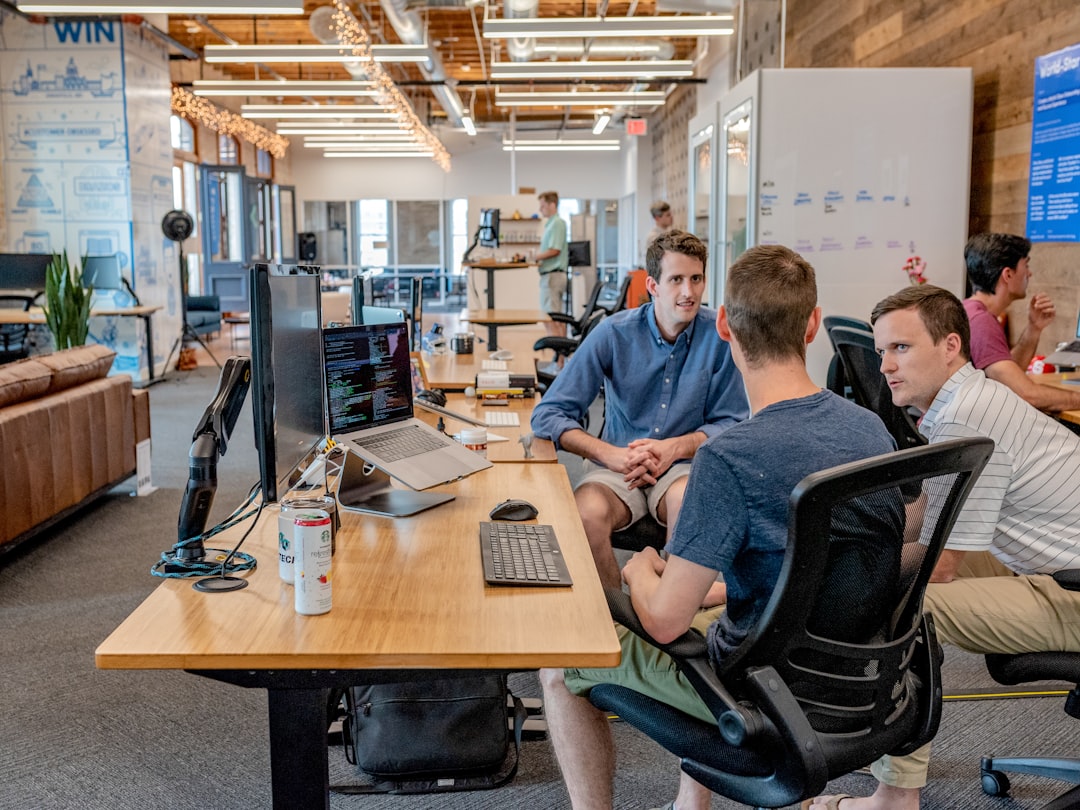

AI in Retail and E-Commerce: From Personalization Engines to Autonomous Supply Chains
Industry Insights
06/08/26
Read time: 6 min
According to McKinsey’s 2026 State of AI in Retail report, companies that have moved beyond pilot programs to enterprise-wide AI deployment are capturing 3-5x more value than competitors still experimenting with isolated use cases. The gap is widening—and the window for achieving competitive parity is narrowing.
For technology leaders evaluating AI investments in retail and e-commerce, the question is no longer whether to implement AI, but which applications deliver measurable returns and how to architect systems that scale beyond initial deployments.
Personalization Engines That Actually Move Revenue Metrics
Modern AI-driven personalization has evolved far beyond collaborative filtering and rule-based recommendations. The most effective implementations now combine real-time behavioral signals, inventory constraints, margin targets, and customer lifetime value predictions into unified decision engines.
Concrete results from enterprise deployments include:
- Zalando’s neural recommendation system processes over 500 million daily interactions, contributing to a 23% increase in average order value among engaged users
- Shopify’s Shop app uses transformer-based models to personalize product discovery, reporting 31% higher conversion rates compared to non-personalized experiences
- Walmart’s real-time pricing engine adjusts over 80 million price points daily based on demand signals, competitor pricing, and inventory levels
The implementation consideration most often overlooked: personalization systems require clean, unified customer data. Organizations spending months building sophisticated ML models on fragmented data consistently underperform those that invest first in identity resolution and data pipeline architecture.
Computer Vision in Physical Retail: Beyond the Hype
Visual AI applications in brick-and-mortar retail have matured significantly, with several use cases now delivering provable ROI. The most impactful deployments focus on operational efficiency rather than customer-facing novelty.
Three applications showing consistent returns:
- Shelf monitoring and planogram compliance: Trax and Focal Systems report that retailers using automated shelf scanning see 2-4% revenue increases from reduced out-of-stock conditions
- Loss prevention: AI-powered video analytics at self-checkout have reduced shrinkage by up to 70% in documented deployments at major US grocers
- Queue management: Real-time customer flow analysis enables dynamic staffing, with implementations showing 15-20% improvements in checkout throughput
The infrastructure requirements are substantial. Edge computing deployments, high-bandwidth connectivity, and robust MLOps pipelines are prerequisites—not afterthoughts. As we’ve explored in our analysis of cloud infrastructure decisions in the AI era, architecture choices made today directly impact scaling capacity tomorrow.
Conversational Commerce and Voice-First Shopping
The interface paradigm shift signaled by Google’s recent search redesign has direct implications for how consumers discover and purchase products. Conversational AI is rapidly becoming the primary interaction model for a growing segment of shoppers.
Current adoption metrics paint a clear picture:
- Voice commerce transactions are projected to exceed $80 billion globally by end of 2026
- Conversational AI assistants now handle 35% of initial customer service contacts at leading e-commerce companies
- AI-powered chat interfaces show 40% higher engagement rates than traditional search-browse-buy flows
What Google’s search evolution reveals is that user expectations are shifting toward natural language interaction across all digital touchpoints. Retailers building voice and conversational capabilities now are positioning for this interface transition. The emergence of models like GPT-Live-1 makes enterprise-grade conversational commerce increasingly accessible.
Supply Chain Intelligence: Where AI Delivers the Largest ROI
Demand forecasting and inventory optimization consistently rank as the highest-ROI AI applications in retail. The compound effect of reducing carrying costs, minimizing stockouts, and improving supplier negotiations creates measurable bottom-line impact.
Case study: H&M’s AI-driven inventory management system reduced overstock by 21% and improved full-price sell-through by 8% in its first full year of deployment. The system processes sales data, weather patterns, social media trends, and local event calendars to generate store-level demand predictions.
Key implementation factors:
- Data granularity matters: SKU-location-day level forecasting outperforms aggregate models by 30-40% in accuracy
- Integration complexity is high: Effective systems require connections to ERP, WMS, POS, and external data sources
- Human oversight remains essential: The most successful deployments use AI for recommendations with merchant review for final decisions
Implementation Considerations for Technology Leaders
The technical and organizational factors that determine AI success in retail are often underestimated during planning phases. Based on patterns observed across successful and failed implementations, several considerations deserve attention:
Data infrastructure first: Organizations with mature data platforms deploy AI applications 60% faster than those attempting parallel development. Prioritize unified customer data, real-time event streaming, and feature stores before model development.
Start with high-confidence use cases: Demand forecasting and recommendation engines have well-established implementation patterns. Novel applications carry higher risk and longer time-to-value.
Plan for MLOps from day one: Model drift, retraining pipelines, and A/B testing infrastructure are operational requirements, not future enhancements. Organizations that treat ML systems as traditional software consistently struggle with production deployments.
Security cannot be an afterthought: AI systems processing customer data and pricing decisions create new attack surfaces. Understanding emerging threats, including those bypassing traditional security controls, is essential for responsible deployment.
What Separates Leaders from Laggards
The retailers capturing outsized value from AI share common characteristics: executive sponsorship with realistic timelines, cross-functional teams that include both data scientists and domain experts, and iterative deployment strategies that prioritize learning over perfection.
The technology is mature enough that implementation capability—not algorithmic innovation—is the primary differentiator. For organizations considering how to build that capability, whether through internal teams, strategic partnerships, or outsourcing partnerships, the strategic imperative is clear: the cost of delayed AI adoption in retail now exceeds the cost of implementation.
Engipulse
Let’s Work Together
Get in touch and let’s discuss your business case — whether you need a dedicated engineering team, AI implementation, or custom software development.